Related Articles


.png)




.png)
You hired an agency three months ago. You’ve sat through ten strategy sessions. You have four messaging frameworks, two positioning decks, and a community playbook that needs its own glossary.
What you don’t have? A single live campaign. A community that is actually growing. Press coverage. Anything your market can see.
But hey, at least the decks look incredible, right?
This is strategy theater. Where agencies charge premium rates for endless workshops while your market moves on. Where “finalizing the approach” becomes a permanent state of being. Where motion masquerades as progress.
One founder showed me an invoice: $30k for a messaging framework they never used. By the time it was “finalized,” their product had pivoted twice. That’s the problem with endless strategy in Web3. The market doesn’t wait for your deck to be perfect. Protocols upgrade. Narratives change. Competitors ship.
Strategy matters. But in an industry this fast, agility matters more. And if your agency can’t move at the speed your market demands? You’re paying premium rates to fall behind.
Welcome to the most expensive performance art in Web3.
The stores sound eerily similar:
Week 1: "We hired them based on the pitch deck. Amazing energy in that first meeting. We'd heard some yellow flags, but the narrative was inspiring. We decided to trust the vibe."
Week 8: "The A-team we met with? Haven't seen them since we signed. But wow, these junior folks sure can make decks. They still haven’t read our docs about what’s worked and what hasn’t, but they’re very confident about their ‘process.’"
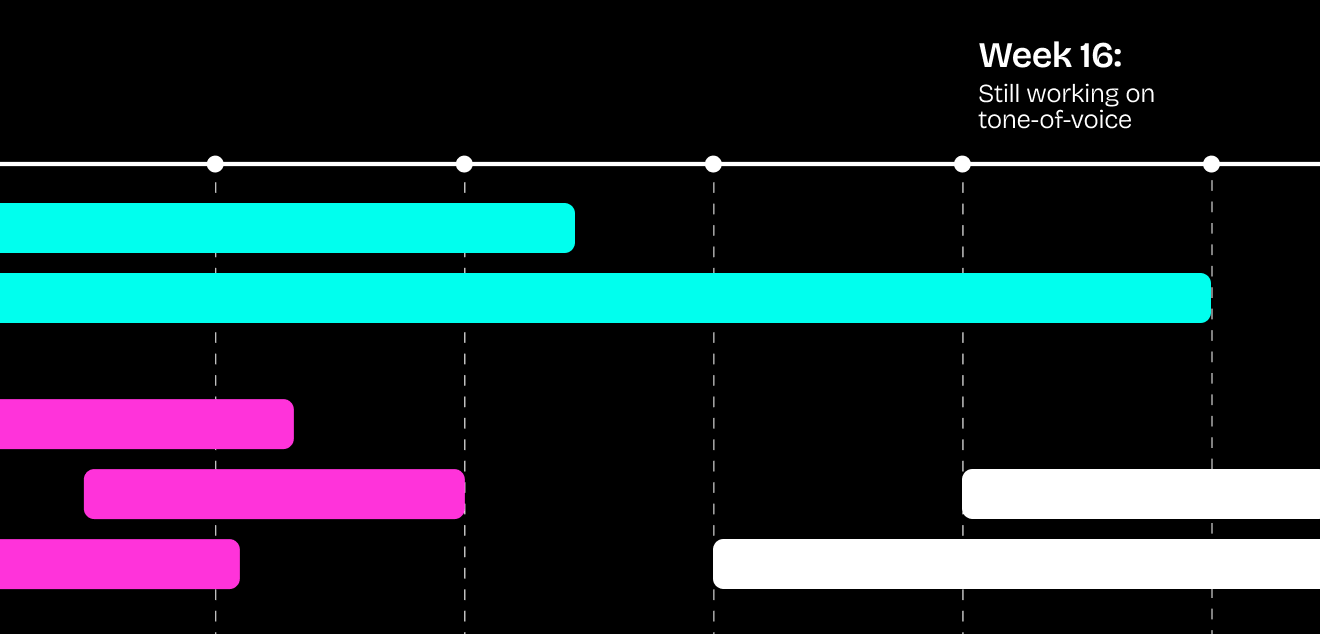
Week 16: "We’re on version six of the tone-of-voice document. Meanwhile, the few posts that pushed got zero engagement. Now they want $15K for ads.”
Week 24: "They pitched an ‘elevated campaign concept’ that adds $40k and has nothing to do with what we need. We asked about community growth campaign timelines again. They said we need to 'finalize positioning first.’ Pretty sure we’re doing all the work ourselves at this point.”
Sound familiar?
Strategy theater isn't unique to Web3. But crypto's complexity became the perfect excuse for agencies to drag things out indefinitely.
"This vertical is complex and the narrative landscape is dense, so we need extra time to develop the right approach." (Translation: The crypto-native folks showed up for the pitch. The team actually working on your account? They're still Googling what a DAO is.)
"Web3 communities evolve rapidly—we need more time to craft a nuanced engagement strategy that will land." (Translation: We don't understand your community and haven't spent time in your Discord. But 'nuanced strategy' sounds better than 'we're winging it.’)
"We need another discovery sprint to really understand the tokenomics." (Translation: We should have understood this before we took your money, but we didn't bother to read your docs.)
Sure, crypto is complex. But if your agency needs six months to “understand the audience,” they’re not a Web3 agency. They’re a traditional agency that added “Web3” to their website and hoped for the best.
Strategy is safer than execution. Decks can't fail. Frameworks can't get ratio'd on Twitter. Actual campaigns? Those have measurable outcomes.
It also hides what agencies don't know. Producing research doesn't require deep Web3 fluency. Executing in crypto—timing narratives, building real communities—that takes knowledge some agencies simply don't have.
And extended "discovery" means extended billing. Launch campaigns and you're suddenly accountable for results. Stay in strategy development and you can delay that reckoning indefinitely.
Meanwhile, your competitors are driving adoption.
Let's be clear: good strategy is essential. Messaging frameworks, positioning docs, audience maps—these are not optional. They're the foundation everything else builds on.
The problem isn’t strategy. It’s when strategy is a substitute for execution.
Strong agencies deliver both: tight strategic foundations AND immediate execution that tests those foundations in real market conditions. You should see tangible output fast: early community engagement, initial media outreach, first campaign tests. All while the strategic framework continues to evolve based on what's actually working.
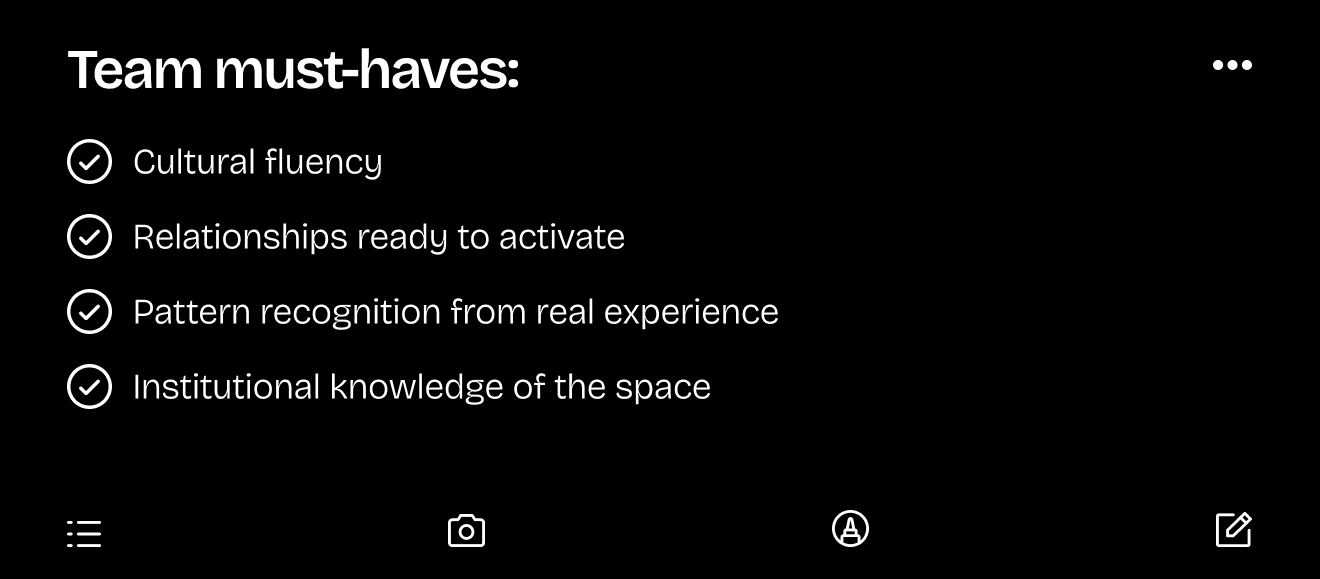
Smart Web3 marketing moves faster when your team already has:
When agencies bring this depth, strategy development happens in weeks, not months. Because they're applying years of pattern recognition from day one.

We got tired of watching agencies slow everyone down. So we built the alternative.
We spent years embedded in Web3, leading with curiosity and experimentation that culminated in a vision of evolved marketing for a new era of innovators. We've tested what works across dozens of launches, built relationships with the people who matter, and navigated the chaos that comes with this space.
When you work with Distractive, you're getting pattern recognition from dozens of launches, relationships we've spent years building, and cultural fluency that can't be faked in a crash course.
Same team from pitch to execution. No bait and switch. The people you meet in week one are the people executing in week twelve. No junior staffers handed your project while the A-team chases the next deal.
Existing Web3 knowledge, activated day one. We don't need months to understand your space because we've lived in it. The relationships are already there. The cultural context is already there. The strategic instincts are already there.
Execution that informs strategy, continuously. We build smart strategy upfront, then stress-test it through real market conditions. Early execution reveals optimization opportunities you'd never predict in planning sessions. We adjust based on actual response, not theoretical frameworks.
This is how we operate. It's baked into our values: action over everything.
No endless discovery sprints. No strategy theater. No deck version twelve while your competitors build momentum.
In Web3, windows move fast. The teams who win aren't necessarily the ones with the most elaborate strategy documents. They're the ones who can think strategically and move decisively.
Every week spent perfecting frameworks is a week competitors spend building momentum. While some agencies schedule another deck review, others are earning coverage, activating communities, and gathering real market feedback that makes their strategy stronger.
Strategy without execution creates documents.
Execution without strategy creates chaos.
The best Web3 marketing delivers both—from day one.
Your Web3 project deserves partners who bring both: the strategic rigor to build strong foundations and the expertise to build them without six months of ceremony.
Because in Web3, the market doesn't wait for your strategy to be perfect.
Ready to start shipping? Let's talk about your project.
Build the future of Web3 with people who get you. No suits required. Memes encouraged.
