Related Articles


.png)
.png)
.png)




I've been on both sides of the agency relationship. I've hired them. I've been disappointed by them. And now I work at one.
So when I see yet another Web3 project leading with "Join the revolution" or "The future of decentralized finance," I feel it in my bones. That visceral frustration of knowing exactly what happened behind the scenes.
Because I've seen those project websites. I've scrolled through those tweets. And I know what often happened: someone paid an agency good money to make them stand out, and got "Join the revolution" instead.
Here's what nobody tells you about generic Web3 messaging: it's not just lazy copywriting. It could be evidence of a broken agency relationship. Projects don't usually set out to sound like everyone else. They hire agencies specifically to differentiate them. They pay for custom strategy. They expect messaging that sets them apart.
What they get instead? The same template every other client got. Just with their logo swapped in.
And if you've been on the client side of this, you know exactly how it happens. You know the frustration of paying for differentiation and receiving generic. Of explaining what makes you unique and seeing none of it reflected in the deliverables. Of wondering how three different projects in your space ended up with nearly identical messaging from three different agencies.
This article is about that gap. Between what agencies promise and what they deliver. Between custom strategy and template work. Between differentiation and "Join the revolution."
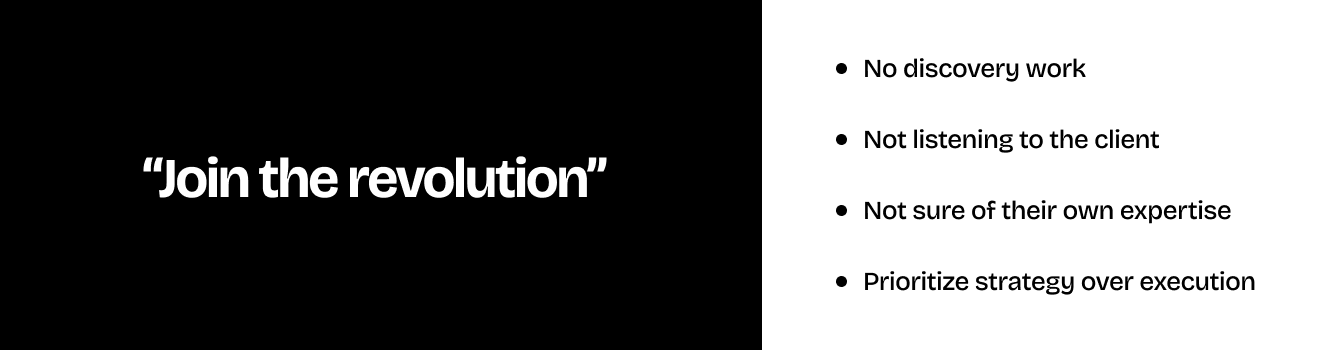
When an agency delivers "next billion users" messaging to a client, it's not just uninspired copywriting. That generic tagline reveals several things about how that agency operates, whether they realize it or not.
Generic client messaging predicts generic everything else. The question is whether you catch it before you sign the contract or after you've spent six months getting nowhere.
Let me tell you what happened when I hired an agency that delivered generic messaging.
Month 1: I spent most of our kickoff calls re-explaining our project. Repeating things that didn't work for us in the past that they kept bringing back up. Emphasizing what has tended to work for us, which they seemed to gloss over. It became clear they hadn't actually read our docs. They nodded along and took notes, but I could tell they were starting from zero.
This is exactly how "join the revolution" messaging gets created. They're not building from your actual differentiation because they haven't done the work to understand it.
Months 2-3: The strategy decks started arriving. Beautiful decks. Incredible design. But here's the thing: the content could have applied to literally any competitor in our space. We'd hired them specifically to help us stand out in a saturated market, and instead, they gave us messaging that could describe anyone. It was template work with our logo swapped in.
The deliverables that were supposed to be "custom content"? Obviously ChatGPT. Generic explainers with zero context about why our approach mattered. Buzzword salad that showed they weren't living and breathing this industry. They were Googling it.
Month 4: I'm still asking when we'll see actual campaigns. They keep saying we need to "finalize messaging first." We're on version six of the messaging document. Meanwhile, the few posts they did push got zero engagement.
The opportunity cost killed us. The campaigns we didn't ship. The momentum we didn't build. The market moments we missed while waiting for the strategy to be "finalized."
Here's what I've learned. Good messaging is almost uncomfortable in how specific it is. It should make some people immediately say "not for us," so the right people can immediately say "finally, someone who gets it.”
When we create messaging for clients at Distractive, it has to pass a simple test: could this apply to their competitors? If yes, we haven't done our job.
Good messaging comes from understanding what actually makes a project different, not from filling in a template with Web3 buzzwords. The difference is in the process. We spend time in your Discord. We read your docs. We talk to your users. We figure out what makes you specifically valuable, not just generally valuable.
That's how you avoid "next billion users" messaging. You do the actual work.
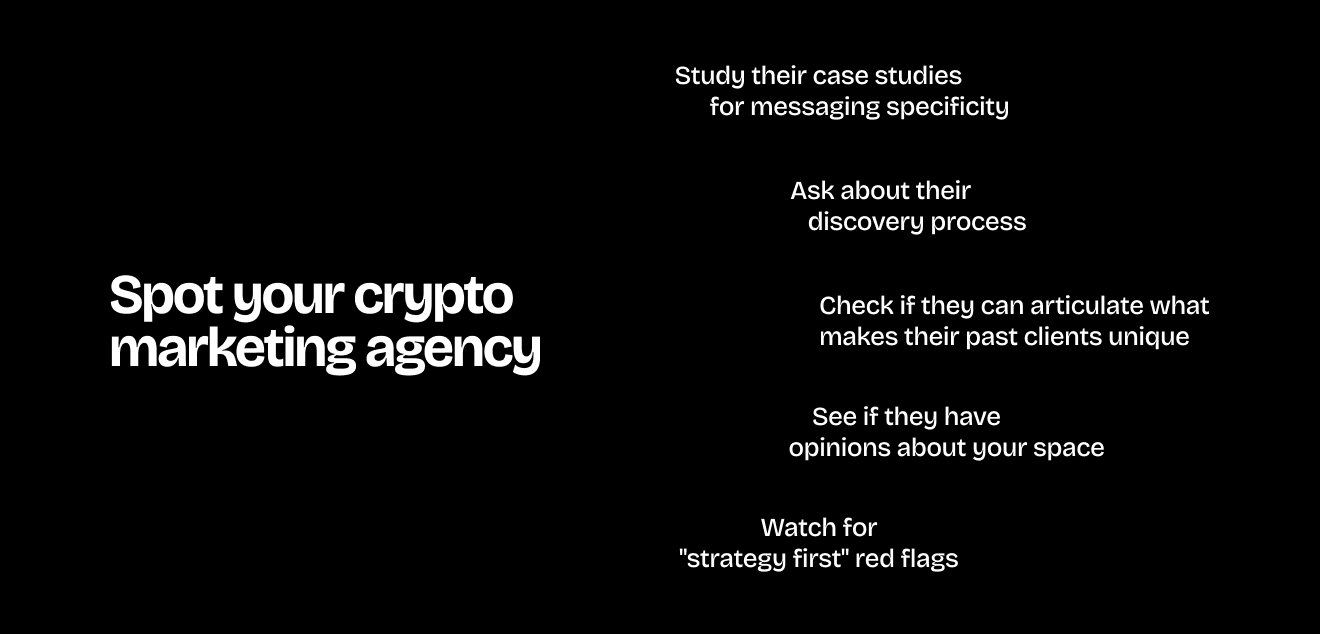
When you're evaluating Web3 content marketing agencies, here's what to look for:
Look for teams backed by years in the space, not months.
After working with enough terrible agencies, I started having a dangerous thought.
"I could literally do this better myself. Maybe I should start an agency."
But alas, I'm but a content marketer, not an entrepreneur. I don’t have what it takes to start an agency, but I do have what it takes to do it better than all those agency writers I’ve worked with in the past.
So I did the next best thing. I found an agency that operates the way I always wished agencies would.
As soon as I met the team for the first time, I knew these people were the real deal. They actually live in Web3. Not tourists who added "blockchain" to their LinkedIn and hoped for the best.
Everyone here genuinely loves this industry. They believe in the tech. They've been here for years, through bear markets and bull runs. The expertise is real. People who excel at their specific craft, not generalists pretending to know everything.
What I've seen since being here:
This is what blockchain content marketing agency work should look like when it's done by people who actually understand the space.
In Web3, windows move fast. Every week you spend with an agency doing discovery is a week your competitors spend building momentum and gathering market feedback.
Generic messaging isn't just annoying. It's expensive. It signals the template-driven processes and strategy theater underneath. Six-month contracts with little to show. Deliverables that could apply to anyone. ChatGPT copy with zero context about what makes you different.
The market doesn't wait for your agency to figure out what they're doing. Protocols upgrade. Narratives shift. Competitors ship.
You need marketers who move like builders. Who understand your space deeply enough to create specific messaging, not generic taglines. Who default to action over endless strategy sessions.
Are you ready to ship campaigns like code? At Distractive, we bring builder DNA to marketing. We move at your pace. We iterate fast. We test live. We scale what works.
No more strategy theater. No more copy-paste deliverables. No more "join the revolution" messaging that could describe anyone. Just execution that matches how you actually build.
Learn about our Web3 content marketing →
Build the future of Web3 with people who get you. No suits required. Memes encouraged.
