Related Articles



.png)





Over 50% of Google searches now display AI summaries, and users click traditional results only 8% of the time when summaries appear. What ranks: content cited in AI summaries (brand exposure without clicks), strong social media presence (Reddit accounts for 21% of Google AI citations), original research and proprietary data AI engines can't find elsewhere, comprehensive technical guides with clear structure and schema markup, verified author expertise with demonstrable credentials, and consistent cross-platform authority. Success metrics have shifted from traffic volume to branded search volume, AI citation frequency, engagement depth, and qualified lead generation.
You've watched it happen in real time. Rankings hold steady. Impressions might even climb. But clicks are down 40%, 50%, sometimes 60% year-over-year.
You keep optimizing. Your team keeps publishing. Nothing moves the needle.
The fact of the matter is that what used to work for SEO isn’t working anymore thanks to AI summaries. As it stands, over 50% of Google searches display AI summaries and that figure is expected to rise to more than 75% by 2028, according to McKinsey and Company.
When these AI summaries appear, the impact on traditional search traffic is devastating. A March 2025 study on user behavior from Pew Research Center shows that users clicked traditional search results only 8% of the time when AI summaries were present, versus 15% without them. Citation links within those summaries? A catastrophic 1% click-through rate.
This isn't unique to crypto. It's a structural shift affecting every industry, with brands experiencing traffic declines anywhere from 20 to 50 percent from traditional search channels. But for crypto protocols competing in highly technical categories where long, question-based queries are the norm, the impact is particularly severe.
The good news is that visibility isn't dead. It's just moved. While traditional Google search loses ground, discovery is happening on social platforms, in AI citations, and through branded searches. SEO has always been a moving target, but 2025 accelerated the changes to a breaking point.
The winning strategies aren't as complicated as the panic suggests. Here's your complete overview of what ranks in 2026 and how to position your protocol for visibility in the AI era.
The traditional SEO goal was simple: rank high, get clicks, convert visitors. But now, that pipeline is broken.
According to the Pew study, Google users are more likely to end their browsing session entirely after visiting a search page with an AI summary (26% of the time) than on pages without one (16%). Your content is still being consumed, just not always by people. It's being read by AI engines, synthesized into summaries, and delivered to users without attribution.
The vast majority of AI summaries (88%) cited three or more sources. If your protocol is one of those sources, users see your brand name associated with authoritative information, even if they never click through. This is brand exposure at scale, happening constantly as AI summaries become the default search experience.
McKinsey's report reveals that a brand's own sites only comprise 5 to 10% of the sources that AI-search references. The rest comes from third-party sources: Reddit discussions, YouTube explainers, affiliate reviews, community forums, and technical documentation. This means you can't just optimize your own content. You need to be present and authoritative across the entire ecosystem where crypto conversations happen.
McKinsey found that 44% of AI-powered search users say it's their primary and preferred source of information, topping traditional search (31%), brand websites (9%), and review sites (6%). For technical queries about blockchain infrastructure, DeFi protocols, or security implementations, AI search is becoming the first (and often only) stop.
Being cited builds brand recognition without requiring a click, and if you're not being cited, you're completely invisible.
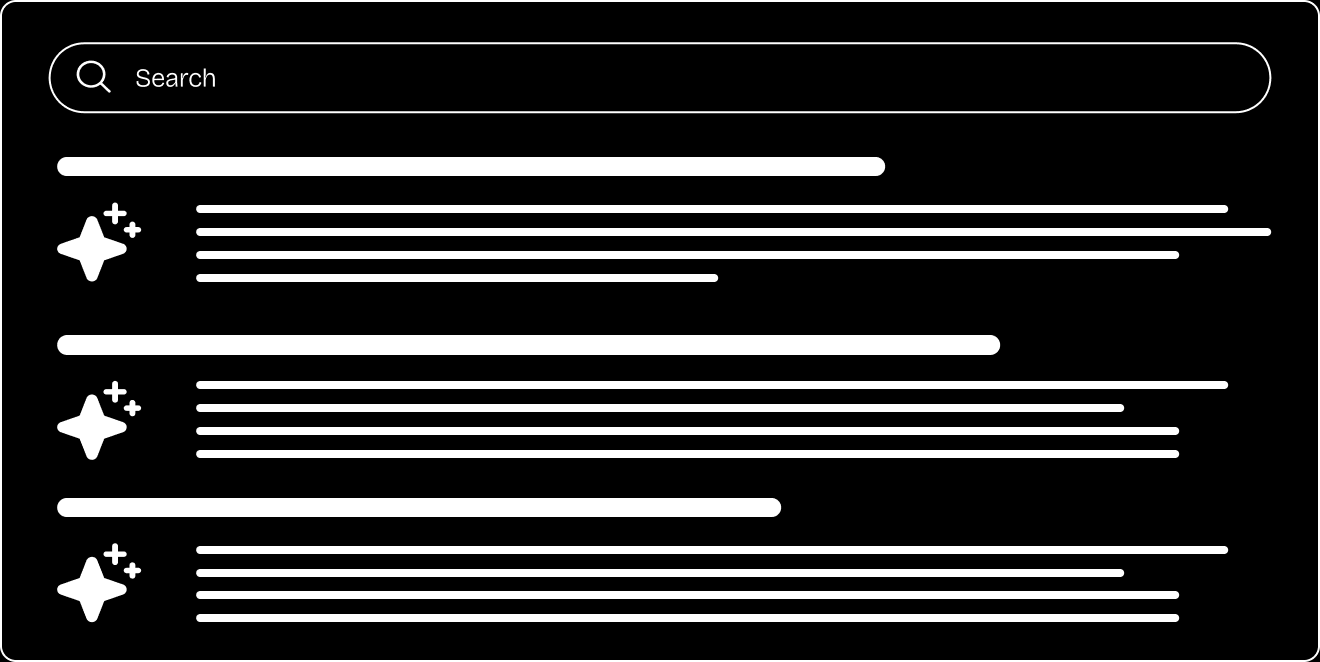
Generative Engine Optimization (GEO), also known as AI Engine Optimization (AEO), is the practice of positioning your content to be cited by AI engines like Gemini, ChatGPT, Perpleixty, and Claude.
AI engines need to both understand your content (requires clear structure) and trust it as authoritative (requires depth and proof of expertise). Many Web3 brands fail at one or both. They either create shallow, keyword-stuffed content that lacks substance, or they bury valuable insights in dense, poorly-structured technical documentation that AI engines can't parse effectively.
The solution isn't choosing between structure and depth. It's delivering both.
The key is comprehensive content with clear structure, not shallow fragments spread across multiple pages.
In a recent podcast, Google's Danny Sullivan warned against "content chunking," the practice of splitting one comprehensive guide into dozens of separate micro-posts to try to game AI systems. This doesn't mean avoiding headings, bullet points, or scannable formatting. It means don't sacrifice depth for artificial fragmentation.
It's about content optimized for human understanding (which AI engines reward) versus content artificially formatted to game current AI behavior (which Google explicitly discourages).
Structures that work:
Structures that don’t:
For crypto protocols explaining technical concepts like smart contract security, cross-chain bridges, or token economics, depth matters. A CTO evaluating your infrastructure solution needs comprehensive technical documentation, not shallow FAQ-style snippets.

While traditional Google search traffic declines, crypto discovery has moved to social media platforms where technical conversations already happen. Remember: a brand's own sites only comprise 5 to 10% of sources that AI engines reference. The rest comes from social platforms and community discussions.
X: The Real-Time Narrative Engine: X remains the primary platform where crypto narratives form and break. While we don't have specific data on AI citation rates, X's role in crypto discovery is undeniable. It's where technical discussions happen in real-time, where protocol teams communicate directly with users, and where industry sentiment gets shaped before it appears anywhere else. For crypto protocols, consistent presence and technical commentary on X builds brand recognition that carries over when people eventually search for solutions.
LinkedIn: B2B Authority for Enterprise Crypto: For protocols targeting enterprise clients, LinkedIn is where decision-makers research. Comment depth and dwell time signal authority. CTOs and treasury managers evaluate you based on who engages with your content and the quality of discussions you're having.
Reddit: The Trust Signal AI Engines Prioritize: Reddit accounts for 21% of sources in Google AI Overviews and 46.7% of citations in Perplexity. AI engines trust community consensus over marketing claims. Authentic participation in technical subreddits builds trust that translates to branded searches and AI citations.
YouTube: Long-Form Technical Explanations: Google indexes spoken words in videos and matches them to user questions. A 15-minute technical walkthrough can rank for dozens of long-tail queries. "How to fix slippage in Uniswap trades" beats "Uniswap tutorial" because it matches the actual question.
AI-generated content is flooding the internet. It's fast, it's cheap, and it all sounds vaguely the same. Google and other search engines are actively filtering for signals that content comes from actual lived experience, not pattern-matched regurgitation.
For crypto protocols, this creates an opportunity. The technical nature of blockchain technology and the need for deep domain expertise mean you can demonstrate authority in ways that most industries can't.
First-hand implementation lessons. "We integrated this oracle solution and here's what broke" is infinitely more valuable than "Here are five oracle solutions to consider." The former is original insight. The latter is aggregation.
Share the edge cases. Explain what the documentation didn't mention. This is the content that satisfies intent because it answers the questions people actually have after they've read the generic guides.
Original research and proprietary data. Publishing your own benchmarking studies, performance analysis, or adoption metrics establishes you as a primary source rather than a curator of other people's insights. When search engines and AI engines look for authoritative data on your category, you want them to cite your research, not summarize someone else's.
Real client outcomes through case studies. "Three enterprises implemented this custody solution, and here's what happened" with specific metrics (onboarding time, transaction volume, security incidents) demonstrates real-world application. Even if you anonymize clients for confidentiality, the specificity of outcomes signals lived experience.
Author credentials that build trust. Strong author pages that showcase expertise matter more than ever. Each piece of content should be clearly attributed to a real person with:
When a CTO reads your technical analysis of Layer 2 scaling solutions, they want to know it was written by someone who's actually implemented these systems, not a generalist content writer following an outline.
AI models can synthesize existing information, but they can't create new knowledge. When you publish original research, first-hand implementation experiences, or proprietary data analysis, you're creating content that both traditional search algorithms and AI engines prioritize because it doesn't exist anywhere else.
This is how you move from being one of many results to being cited as the authoritative source.
EEAT (Experience, Expertise, Authoritativeness, Trustworthiness) sits at the center of this shift. The more you prove lived experience and subject matter authority through original contributions, the stronger your visibility becomes in both traditional search rankings and AI-generated summaries.
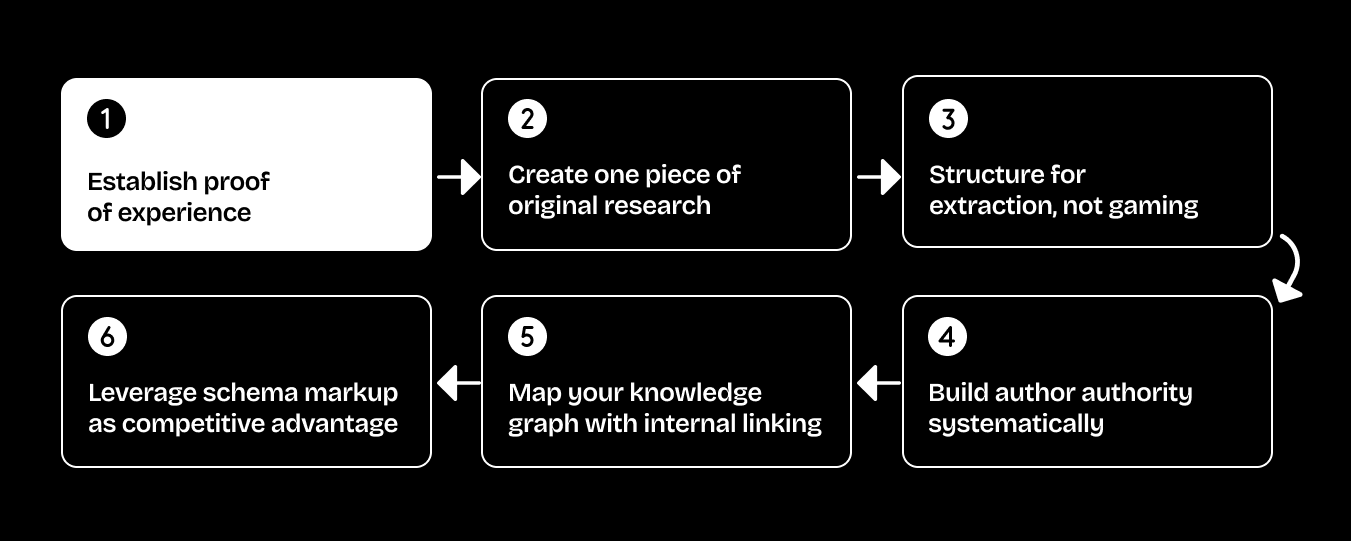
If you're rebuilding your crypto search engine optimization strategy from scratch, here's the priority order:
Before you write another blog post, ask: what do we know that no one else does? What unique data do we have access to? What have we implemented that we can share lessons from?
Build your content strategy around that unique knowledge position.
This might be:
This is content only you can create. It's inherently more valuable than aggregated or derivative content because it's verifiable and original.
It doesn't have to be massive. It has to be original and valuable.
This becomes your authority anchor. Everything else you create points back to this foundational research. Other publications cite it. AI engines reference it. Your brand becomes associated with this specific insight or data set.
Quality over volume. One well-researched, data-driven piece of original content will outperform fifty AI-generated blog posts in both SEO value and business outcomes.
Use proper schema markup. Write clear, descriptive headings. Create a logical information hierarchy. Include relevant internal links that map the boundaries of your expertise.
But don't artificially fragment content. Comprehensive beats chunked every time.
For technical deep dives (2,500+ words):
For comparison guides:
For how-to guides and tutorials:
Your domain authority increasingly depends on author authority. Especially in crypto, where pseudonymity is common, verified expertise matters.
Connect content to real humans with demonstrable credentials:
If your team includes former engineers from major protocols, former compliance officers from exchanges, or researchers with published papers, make that visible. These credentials are EEAT signals that both search engines and AI engines recognize.
Every piece of content you create should connect to related content on your site. This creates a knowledge graph that shows both users and AI engines the breadth and depth of your expertise.
Internal linking strategy:
This helps AI engines understand that you're not just ranking for isolated keywords. You're a comprehensive authority on interconnected topics within your domain.
Many crypto websites have a basic schema or none at all. Comprehensive, accurate schema markup is an opportunity to stand out.
Implement organization schema to establish your entity in Google's knowledge graph, Article schema on every blog post to clarify authorship and publication details, and FAQ Page schema where you're directly answering common questions. This structured data helps both traditional search engines and AI engines understand your content type, authorship, and organizational authority.
If you're still doing these things, you're wasting resources:

If clicks and rankings are vanity metrics now, what should you measure instead?
How many people are searching specifically for your brand, protocol, or product?
Growing branded search volume indicates you're building awareness and recognition. It means people are hearing about you in other contexts (conferences, podcasts, Twitter, word of mouth, AI citations) and then searching for you specifically.
This is the most important metric because it shows you've created demand, not just captured it.
How to track it:
Is your content being referenced in AI-generated summaries?
This is harder to track systematically, but you can spot-check:
Set up a monthly audit where you query AI engines with questions in your domain and note whether your content gets cited. Over time, you should see increasing mentions as your authority builds.
Are people actually reading your long-form content, or bouncing after ten seconds?
Key metrics:
For crypto content specifically, if your 3,000-word technical explainer has an average time-on-page of 45 seconds, you've either attracted the wrong audience or failed to deliver on your headline promise.
Use tools like:
How many of your demo requests, whitepaper downloads, or consultation bookings come from organic search?
More importantly, what's the quality of those leads? Are they decision-makers at companies in your ideal customer profile, or random tire-kickers?
Track:
For B2B crypto companies, five qualified enterprise leads from organic search might be worth more than 10,000 visitors to your blog.
Quantity of backlinks matters less than quality and context.
Track:
A single in-depth feature in The Block citing your research is worth more than 100 links from crypto content farms.
Crypto SEO in 2026 isn't about manipulating search engines. It's about becoming undeniably authoritative in your specific domain so that when anyone (human or AI) looks for information in your category, your brand is the obvious source.
This requires actual expertise you can demonstrate with original data, consistent execution across comprehensive content, technical rigor in how you structure and mark up content, and author credibility with verifiable track records. It's harder than traditional SEO tactics, but it's also more defensible. Anyone can build backlinks. Not everyone can publish original research or earn citations from AI engines and respected publications.
The crypto projects dominating discovery in 2026 treat SEO as an authority-building exercise, not a traffic-generation tactic. They're showing up in AI summaries, earning branded searches, and converting qualified leads because they've established themselves as the definitive source in their domain. Stop chasing traffic. Start engineering how you're understood.
Ready to rebuild your crypto SEO strategy for 2026? Distractive is a crypto SEO agency that specializes in authority-building content strategies for Web3 companies. We help crypto protocols move from generic content marketing to GEO-optimized thought leadership that gets cited by AI and trusted by decision-makers. Contact us to diagnose your current strategy's blind spots.
Build the future of Web3 with people who get you. No suits required. Memes encouraged.
