Related Articles



.avif)



Major ad platforms like Google, Meta, and X now allow cryptocurrency advertising with proper verification and compliance. Success requires platform-specific approval (especially Google), clear targeting, transparent messaging, and consistent optimization. Start with X for flexibility, build trust on Meta through verified accounts, and get Google certification before launch. The key is treating crypto ads like regulated financial services: follow the rules, avoid hype, and focus on what you actually build.
When Web3 started, big ad platforms didn't want anything to do with it. Web3 brands and projects were sometimes associated with rug pulls and scams. For traditional big tech companies, the term Web3 and everything associated just didn’t seem worth the hassle. Fast forward to today, and things look very different. There are clear policies, specific requirements, and real opportunities for companies that play by the rules.
This post is for real builders, not people trying to run scams or hide behind buzzwords. These tips won't perform miracles, but they'll help real Web3 companies advertise safely, get approved faster, and reach the right audiences.
If you're building in Web3, you already know how hard it is to get visibility. The harsh reality is that organic reach alone won't cut it anymore. Social media algorithms have shifted dramatically to prioritize paid content over organic posts. Even people who follow you and want to see your updates won't unless you're paying to put your content in front of them.
This creates a frustrating cycle: you're investing time and resources into creating quality content, building genuine technology, and serving real users, but your message gets buried under a mountain of paid promotions from competitors who understand the game. Meanwhile, projects with bigger ad budgets but worse products are capturing the attention of the exact audience you're trying to reach.
Without ads, you're essentially invisible. Your best blog post, your most important product launch, your game-changing feature update? They'll reach a fraction of the people they should. And in a space as competitive and fast-moving as Web3, that invisibility is expensive. Every day you're not reaching your target audience is a day your competitors are.
Running ads the right way changes this equation completely. It puts your message in front of the right people at the right time, whether they're already looking for what you offer or they just don't know they need it yet. But here's the critical part: you need to do it without risking your account, blowing your budget on disapprovals, or wasting weeks waiting for reviews that never get resolved. That's what this guide is for.
In early 2018, Google, Facebook, and Twitter coordinated a sweeping crackdown on cryptocurrency advertising, citing concerns about protecting consumers from fraud. In just the first two months of that year, people lost $532 million to cryptocurrency scams. For the platforms, a blanket ban was easier to enforce than trying to distinguish legitimate projects from bad actors. If you mentioned NFTs, crypto, or blockchain in any of your ads or even on your brand’s website, your account could easily be flagged.
But quickly, things began to change. By September 2018, Google reversed course and allowed regulated exchanges to advertise in the US and Japan. In August 2021, the company expanded access to wallet providers, requiring certification through FinCEN or state banking authorities. Meta followed in December 2021, expanding its accepted regulatory licenses from three to 27, reflecting what the company called the "maturation and stabilization" of the crypto industry.
Why the sudden shift? Growing regulatory clarity in countries like the US, UK, and Japan gave platforms confidence to separate legitimate businesses from scams. Institutional players entering the space demanded advertising access. And frankly, the platforms were leaving significant ad revenue on the table. Today, there are dedicated support teams, clear documentation, and established review processes. It's not a free pass, but it means compliant companies can advertise like any other regulated financial service.
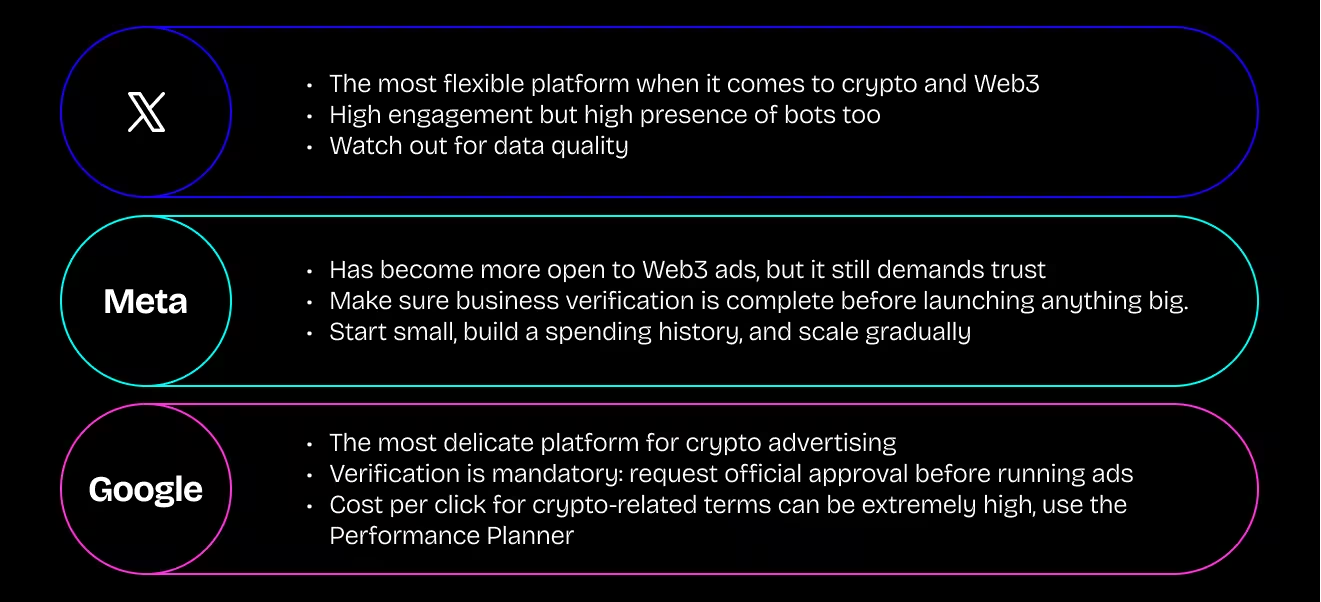
X (fka Twitter) is the most flexible platform when it comes to crypto and Web3. You can usually advertise without much friction. The main thing to watch out for is data quality. X can drive a lot of engagement, but it also has a high presence of bots. Always track your traffic and conversions using a trusted analytics setup: your own dashboard, CRM, or analytics platform.
Meta has become more open to Web3 ads, but it still demands trust. You'll have a better approval rate if you run ads from a personal and verified account, connected to a Business Manager with proper documentation. Start small, build a spending history, and scale gradually. Keep an eye on notifications, talk to your ad rep whenever possible, and make sure your business verification is complete before launching anything big.
Google is the most sensitive platform for crypto advertising. Verification is mandatory, and depending on your campaign type, you'll need to request official approval before running ads. If your business involves blockchain, exchanges, or financial products, fill out this form and provide all required documents. Once verified, you can advertise safely.
Cost per click for crypto-related terms can be extremely high, so using the Performance Planner before launching to understand potential CPCs and budgets is best. This helps you set realistic expectations and avoid overspending on keywords that don't convert. After approval, your risk of suspension is very low if you stay compliant.
In order to run any paid media campaigns, we highly recommend knowing what your main objective is for success. Do you want to raise awareness about a new product or tool? Are you looking to get sign-ups for a token launch? Is there a major event happening in a specific region that you want to get users to visit you at? Or are you trying to attract new leads to buy from you?
Understanding the main goal is an essential part of campaign building, so you can define whether you need to build awareness, drive traffic to your website, or focus on conversions in your ad campaign.
Everyone thinks of just attracting crypto bros when it comes to running crypto ads, but that is actually wrong. There are tons of professionals joining the Web3 space, including enterprises, institutions, and even the more traditional retail audiences of web2.
At Distractive, we have worked with clients in blockchain that often have complex, technical products that the everyday person may not understand. That’s why it’s important to make sure the ads we’re promoting connect with the right audience, in the right place, at the right time. In order to do this, we start with audience identification. Are we targeting technical founders or retailers looking for the next big run? The more we know about the target audience, the easier it is for us to meet them where they are online.
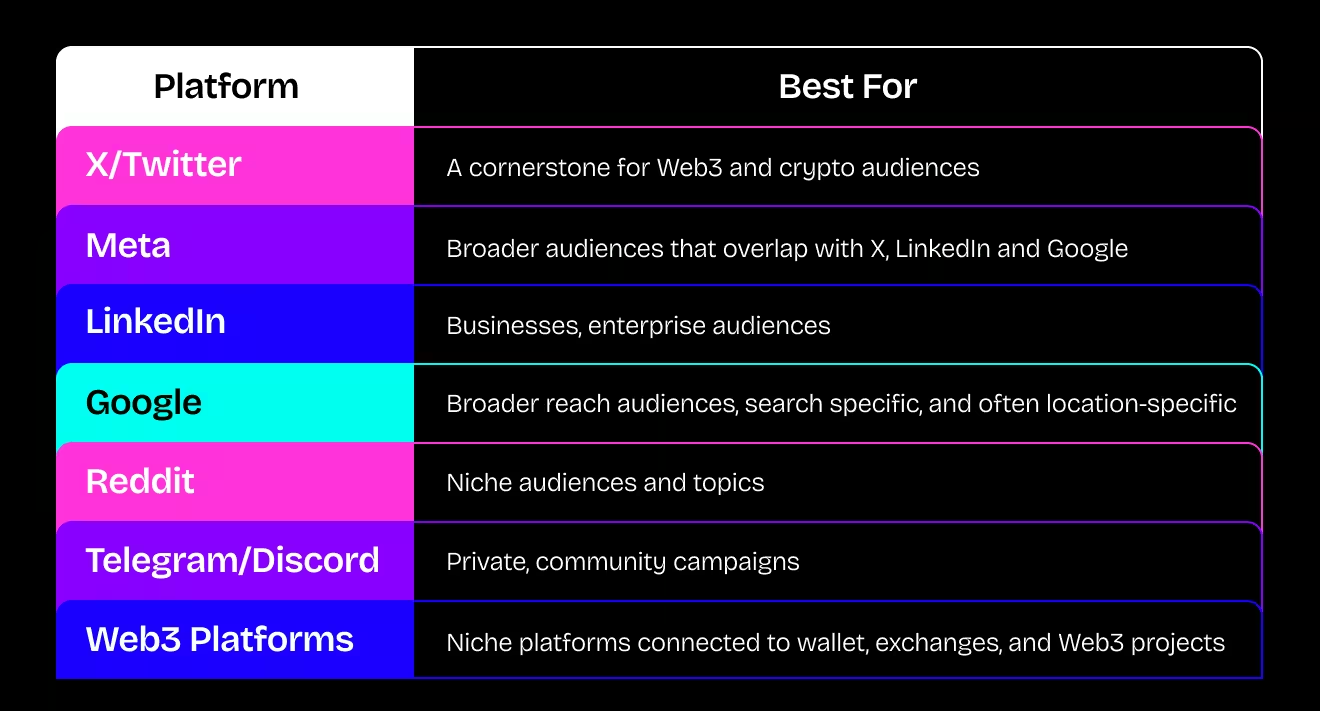
Once you know who your target audience is, it's easier to decide on which ad networks are the best fit for your cryptocurrency ad campaigns. While there are a few main ones we’ve already touched on, many people forget that there are a lot of possibilities out there on the World Wide Web, and we happen to have experience across the vast majority.
Here are some platforms that you might want to consider:
After you have determined your audience and appropriate channels, you can start to form a budget that meets your goals. Ideally, you can start building an audience on some platforms, such as X or Linkedin to see how many people may see your ads or engage with them. Based on these averages, you can start to form an ideal budget for how many people you think may then filter through to website traffic or conversions. After the campaign ends, it’s important to keep tabs on where your actual budget brought results in comparison to what your goals were.
One of the most important steps in your crypto advertising campaign strategy is often done quickly but deserves plenty of attention, and that is your actual ads! Creating ad copy can be difficult, which is why it’s helpful to work with content marketers who are knowledgeable about the subject and know how to position it for appropriate audiences. You also want to ensure that the ad copy is clear, concise, and has a direct call to action or CTA. If you’re using visuals, the ads need to have brand consistency, have the appropriate specs for different ad platforms, and complement the copy. It's important to never have copy and visuals that compete against each other. Working with your team or external design experts to ensure the goal is in mind can help keep ad creatives on par.
Finally, you’re ready to launch your crypto ads campaign! For some, this process might be just a couple of days' worth of work, and for others, it can take weeks or even months with revisions, approvals, and sign-offs from legal. Either way, you put in the effort to run a successful campaign, so there’s one last step that's critical to running ads. Monitoring and optimizing your campaign on the regular is an absolute must. So often, paid media gets turned on like a crockpot in a “Set it, and forget it” mode. The problem is that every day, your ads are showing you signs of what's working, what’s not, and where improvements can be made. It takes a lot of diligence to keep monitoring, but the more you are on top of it, the easier it is to cut wasteful spending and find fruitful results.
By the end of your campaign, you’ll have the confidence to report on what worked, what didn’t, and how you can continue to improve upon your crypto ad campaigns next time!
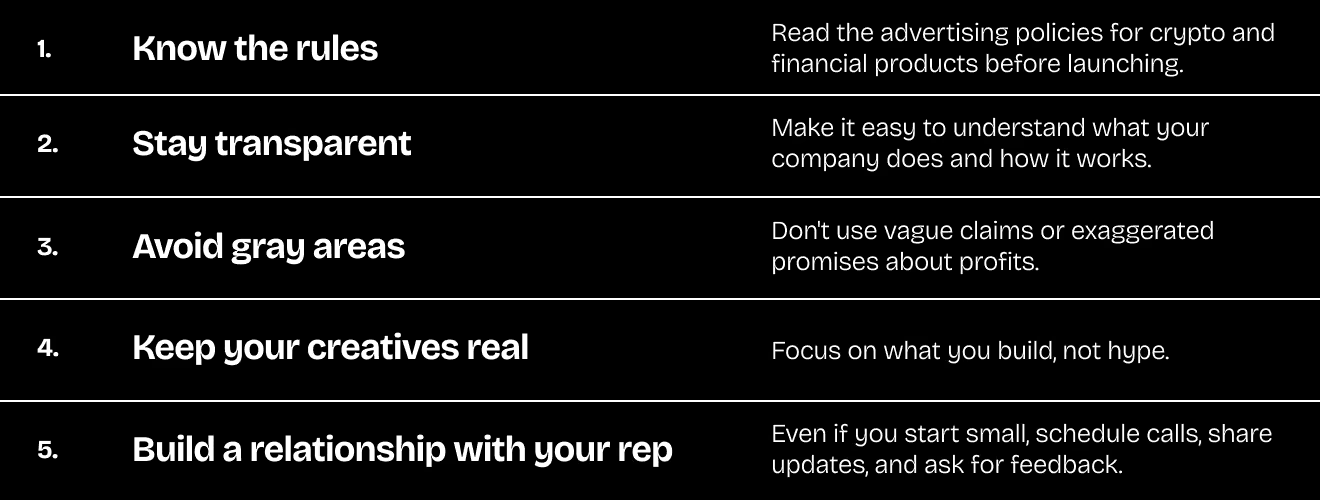
There are several ways to get in trouble with running your crypto advertising. First things first, you want to make sure you’re following the regulations in the geographical locations you’re targeting. Running ads in Europe? Make sure your ads, website, and email marketing practices are respectful to the laws of GDPR. Running ads in North America? There are specific laws in the United States for California and other jurisdictions. You might need to have a cookies policy on your site, or even an option for users to opt out of all targeting and cookie collections. There are links to best practices for each ad network pertaining to this, as well.
Folks often get a little too excited about what they’re selling (or shilling), and when it comes to ads, this tends to come off as misleading. Even if you mean well, saying your company is the best at whatever you’re selling needs to come with some kind of proof. If not, you’ll often find yourself with tons of clicks but a high amount of people leaving because they’re not seeing what they were promised. Make sure your offer is clear so users know exactly what they can expect when they click on your ad.
Always avoid a spray and pray approach. Whenever you’re running crypto ads, the more specific you can get in your audience, the more likely you will see good results.
Recently, when running paid media for a major blockchain network, we created a variety of ads across four ad groups that the client wanted to see traction with. Each ad group had a specific audience attached to it, such as builders or job seekers. When it came down to the actual ads, we were able to get very specific in the actions those personas valued. For example, builders were presented with messaging that touched on the products they might be building, and were driven to a landing page where they could seek support via documentation and funding. For job seekers, the messaging we presented was encouraging them to seek opportunities within that blockchain network’s ecosystem.
The results? Running those ads across multiple platforms gave this network not only a boost in website traffic and visibility, but we saw an uptick in activity on those exact landing pages with promising results.
Before you start, turn towards the above ad platforms and start throwing money around, it’s really important to make sure you have a strategy in place for your cryptocurrency advertising plans. Besides having a clear budget, you may also want to fine-tune your audience, tweak ad copy, and ensure you're going to get the results you want. If you’re more interested in focusing on building your product, leave the marketing strategy to experts like us. Distractive is a crypto PPC marketing agency that can help you get your cryptocurrency ads running in no time.Get in touch and let's make it happen.
Build the future of Web3 with people who get you. No suits required. Memes encouraged.
