Most crypto companies target "everyone in Web3" and wonder why nothing works. Narrowing your crypto target audience means doing the research: analyzing who's actually using your product, studying where competitors' audiences live, mapping detailed user characteristics, and validating with real data. Build user personas, pick your primary audience, and let that foundation guide every GTM decision from positioning to content. Skip this, and you're guessing. Get it right, and everything else gets easier.
The Targeting Problem in Crypto
Ask most crypto founders who their target audience is, and you'll hear some version of: "Anyone interested in blockchain technology." Or "People who care about decentralization." Or my personal favorite: "everyone."
That's not a go-to-market strategy. That's wishful thinking.
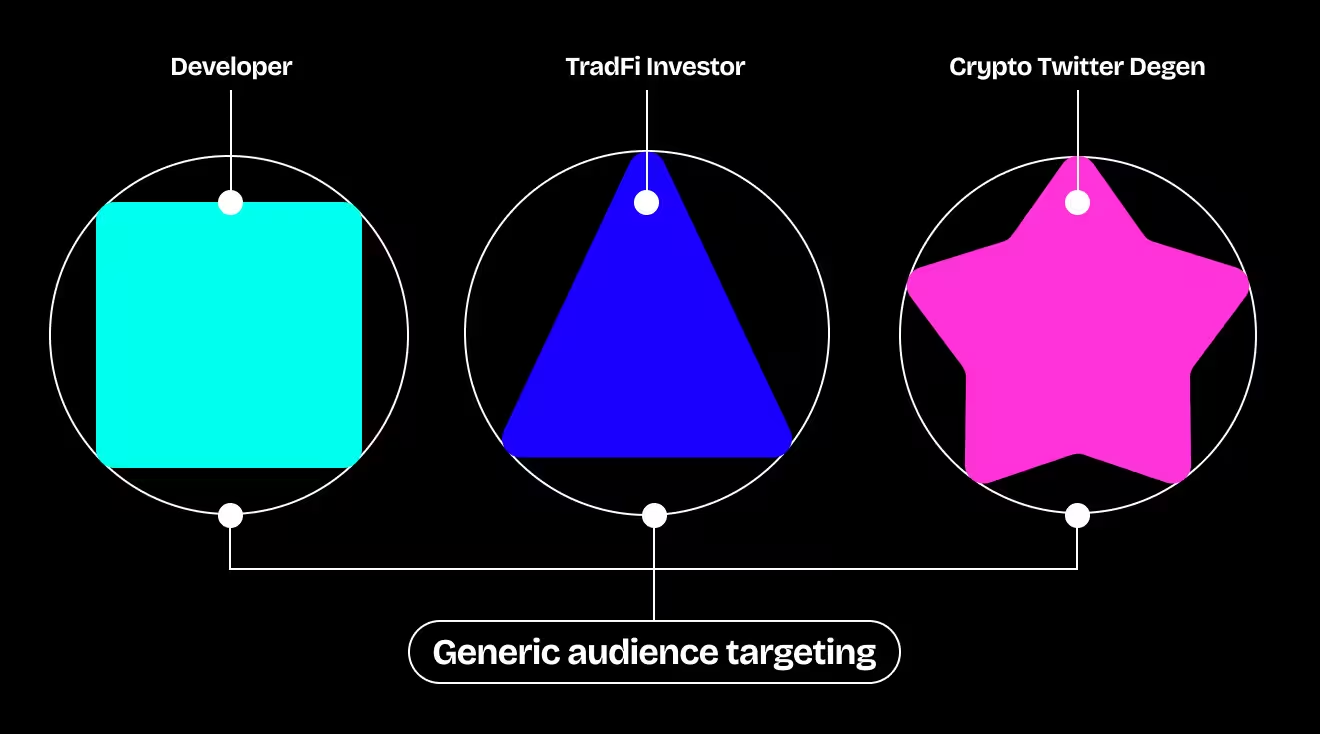
Saying your crypto target audience is "everyone" is the same as having no target at all. You end up with generic messaging that speaks to no one, positioning that misses the mark, and a GTM strategy that burns cash without gaining traction.
The broader crypto market is massive and fragmented. Your actual target audience is a specific subset of that market. People with particular pain points, specific levels of technical knowledge, and distinct goals. Until you can articulate exactly who those people are, your marketing strategy is just expensive guessing.
This is the foundational work that has to happen before you launch a token, ship a product, or build a community. Who are you building for? Who should buy this? Why should they care?
There is no monolithic "crypto user." A DeFi power user optimizing yield farming strategies has different motivations than an enterprise CTO evaluating blockchain solutions. A degen who lives on crypto Twitter speaks an entirely different language than a TradFi investor opening their first account on a crypto exchange. A developer building smart contracts needs completely different information than someone figuring out how to set up a crypto wallet.
Different knowledge levels. Different use cases. Different purchase criteria. Different decision-making processes.
When crypto companies try to target "Web3 users" broadly, they end up building products that try to serve everyone and end up serving no one particularly well. They position themselves in ways that confuse rather than clarify. They price without understanding what their actual audience values. Their GTM strategy becomes a series of expensive experiments with no hypothesis.
Without a properly defined target audience, every strategic decision, from product features to pricing to positioning, is expensive guessing. But when you actually narrow down who you're building for, you can craft GTM strategies that land. You know which features matter most. You understand how to price. You can position your product in a way that makes the value immediately clear. The difference between a solid GTM strategy and one that burns cash is a properly defined crypto target audience.
The Crypto Audience Research Framework
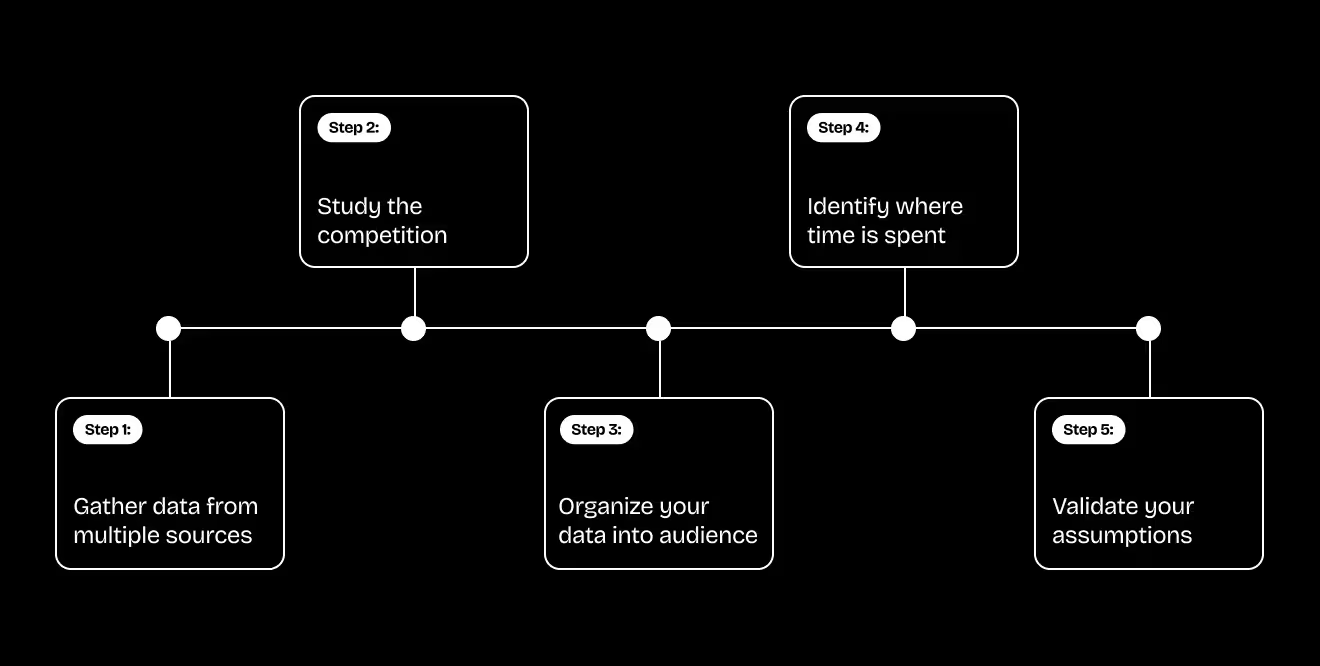
Here’s how you move from "we're building for Web3 users" to "we're building for X type of person with Y problem who currently uses Z solution."
Step 1: Gather Data From Multiple Sources
Pull from multiple sources. One data point isn't enough.
Analyze your existing users (if you have them):
Google Analytics: demographics, location, interests, behavior flow on your site
Social media analytics: who follows you, what content they engage with
Community channel activity: who's active in Discord/Telegram, what they discuss, what questions come up repeatedly
Support tickets: where do people get stuck? What causes confusion?
Sign-up data or onboarding surveys (if you collect it)
For on-chain products: wallet behavior, transaction patterns, what other protocols they use
Interview your current users:
Schedule calls with 10-15 users who represent different segments
Ask: How did you find us? What problem were you solving? What almost stopped you? What alternatives did you consider?
Listen for language patterns—the words they use matter
Research potential users:
If you haven't launched yet or want to expand, identify where your potential audience hangs out
Join their Discord servers, subreddits, Telegram groups
Observe what they talk about, what frustrates them, what gets them excited
Reach out directly if possible: "I'm building X, can I ask you a few questions?"
Digital ethnography (aka online research):
Lurk in spaces where your potential audience lives: crypto Twitter, Reddit threads, niche Discord communities
What problems do they complain about? What language do they use? What solutions are they looking for?
Check YouTube comments on relevant videos, podcast discussions, forum threads
Make educated assumptions:
Based on the problem you're solving, who logically needs this?
What level of technical sophistication does your product require?
What does someone need to believe or value to care about what you're building?
Assumptions aren't enough on their own, but they give you a starting hypothesis to test
Step 2: Study the Competition and Adjacent Companies
Your competitors have already figured some of this out. Learn from them.
Who are similar projects targeting?
Look at their messaging and positioning. Who are they speaking to?
Check their case studies, testimonials, and featured customers
Read their community channels. What types of people are active there?
Where do their communities congregate?
Which social media platforms get the most engagement?
Are they heavy on Twitter, or is most activity in Discord or Telegram?
Do they focus on LinkedIn (institutional/B2B) or Reddit (retail/community)?
What messaging resonates?
Which announcements or content pieces get the most traction?
What language do they use? Crypto-native and technical, or accessible and mainstream?
What pain points do they emphasize in their marketing?
Identify gaps:
Who's being underserved by existing solutions?
What audience segments are competitors ignoring?
Where's there room for you to own a specific niche?
Understand the landscape so you can position strategically.
Step 3: Organize Your Data Into Audience Profiles
Take what you gathered and organize it. Look for patterns.
Demographics (the basics):
Age range and location
Professional background or industry
Income level (especially relevant for investment products)
Web3-specific psychographics:
Technical knowledge level: Can they navigate a DEX? Do they understand how crypto wallets work? Or are they complete newcomers needing hand-holding?
Risk tolerance: Early adopter willing to try new things, or conservative and cautious?
Crypto experience: Long-time holder since early bull runs, or just arrived in the last year?
Primary motivation: Making money, learning about the tech, building something, or solving a specific problem?
Behavioral patterns:
How frequently do they engage with crypto products or content?
Are they active traders, long-term holders, or just exploring?
Do they prefer self-custody or custodial solutions?
Do they engage with communities actively or prefer to stay private?
Pain points specific to their crypto experience:
Overwhelmed by complexity and jargon?
Frustrated by poor UX or confusing interfaces?
Concerned about security and scams?
Looking for better returns, lower fees, or more transparency?
Need regulatory clarity before they'll participate?
Look for commonalities. Patterns will emerge. That's your foundation for user personas.
Step 4: Identify Where They Actually Spend Time
Look for commonalities. Patterns will emerge. That's your foundation for user personas.
Developers and builders:
GitHub, technical Discord servers, Stack Overflow
Developer-focused Twitter accounts and newsletters
Hackathons and builder communities
Specific subreddits like r/ethdev or language-specific forums
Retail investors and traders:
Crypto Twitter for real-time discourse and alpha
Trading-focused Discord and Telegram groups
YouTube channels covering market analysis and trading strategies
Reddit communities like r/cryptocurrency or project-specific subs
Institutional and enterprise:
LinkedIn for professional networking
Industry conferences and closed-door events
Regulatory and compliance-focused publications
White papers, research reports, analyst briefings
Crypto-curious newcomers:
Educational YouTube channels and beginner guides
Mainstream social media exploring crypto content
User-friendly exchanges with built-in education
General interest podcasts covering crypto topics
Content consumers and learners:
Crypto podcasts and newsletters
Medium, Mirror, and blog platforms
Educational platforms and course sites
Twitter threads and long-form content
If you're targeting retail traders but only posting on LinkedIn, you're missing them. If your audience is institutional but you're only on crypto Twitter, you're in the wrong place. Match your presence to where your people actually are.
Step 5: Validate Your Assumptions
You've done the research. You think you know who your target audience is. Now test it.
Run targeted surveys:
Ask your community directly about their backgrounds, goals, and frustrations
Use tools like Typeform or Google Forms to gather structured data
Incentivize participation if needed (discounts, exclusive access, small rewards)
Host AMAs and feedback sessions:
Direct conversation surfaces insights you'd never get from passive observation
People will tell you exactly what they need if you just ask
Test content and messaging with different segments:
Create content tailored to different audience types and track performance
A/B test landing pages with different value propositions
Monitor which messaging drives actual conversions, not just clicks
Use analytics to verify behavior:
Google Analytics: who's visiting your site, from where, and what are they doing?
Social media analytics: which posts resonate with which demographics?
Email open rates and click-throughs by segment
Conversion data: who actually becomes a customer?
If the data contradicts your hypothesis, adjust. Your target audience is whoever actually shows up and converts, not who you hoped would show up. Be willing to pivot based on what the research tells you.
Creating Crypto User Personas That Actually Work
User personas turn research into action. They guide product decisions, messaging, feature prioritization, and GTM execution.
Beyond Basic Demographics
A crypto user persona needs more than "Sarah, 32, lives in San Francisco, works in tech." That tells you almost nothing about how to reach her or what she needs from your product.
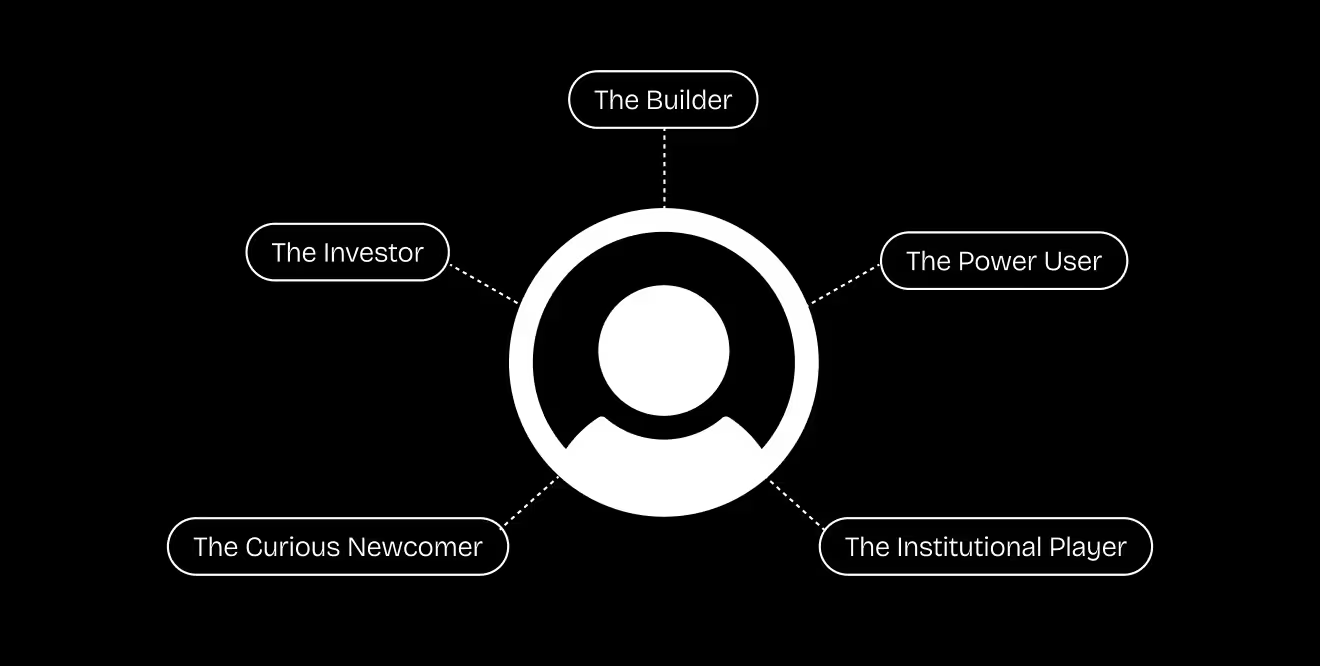
Common Crypto Audience Archetypes
Most crypto companies end up targeting some version of these archetypes. You probably won't target all of them, and that's the point.
The Builder (Developer/Founder)
Technically sophisticated, understands how protocols work
Motivated by innovation, composability, and solving hard problems
Needs technical documentation, open APIs, and developer support
Hangs out on GitHub, technical Discord servers, and builder-focused Twitter
Lives on crypto Twitter, Discord alpha groups, Telegram
Decision criteria: opportunity size, timing, community credibility
The Curious Newcomer (Mainstream Adoption)
Limited crypto experience, needs educational support
Motivated by learning or solving a specific problem (remittances, investing, etc.)
Overwhelmed by complexity and concerned about security
Consumes beginner-friendly content on YouTube, blogs, mainstream platforms
Decision criteria: ease of use, trustworthiness, clear value proposition
The Institutional Player (Enterprise, Compliance-First)
Needs regulatory compliance, legal clarity, and institutional-grade infrastructure
Risk-averse, moves slowly, requires extensive due diligence
Operates through formal procurement processes
Engages via LinkedIn, industry events, white papers
Decision criteria: compliance, security audits, established reputation
Your project likely targets two or three of these max. Trying to serve all of them simultaneously usually means you serve none of them well.
Prioritizing Your Primary Audience
You can't be everything to everyone, especially in the early stages. Pick your primary persona and build for them first.
How to choose:
Which audience is most underserved by existing solutions?
Which audience has the highest willingness to pay (or engage)?
Which audience aligns best with your team's expertise and network?
Which audience provides the strongest foundation for growth?
Your secondary audiences matter too, but they shouldn't dictate your core product decisions or primary messaging. Think of them as expansion opportunities once you've nailed product-market fit with your primary audience.
For example, you might build first for crypto-native power users who give you feedback and credibility, then expand to curious newcomers once your product is polished. Or you might target institutional players first for revenue, then build retail-facing products later. The sequence matters.
Just don't try to do both at once before you've proven either one works.
Common Mistakes in Crypto Audience Targeting
Assuming all "crypto people" are the same. A developer building infrastructure has nothing in common with someone buying their first Bitcoin. Your messaging can't speak to both.
Ignoring community signals and behavioral data. Your Discord, support tickets, and active users are telling you exactly who's interested. Most teams ignore this in favor of who they wish their audience was.
Building personas based on aspiration instead of reality. You wanted institutions but got retail traders. That's information, not failure. Adjust your positioning or double down on your intended audience, but don't ignore the gap.
Targeting too broadly out of FOMO. "We don't want to exclude anyone" means you end up excluding everyone. Narrow targeting feels risky but broad targeting guarantees mediocrity.
Not revisiting personas as your project evolves. Your target audience six months ago might not be your target audience today. User personas aren't static.
Confusing community size with community fit. A Discord with 50,000 airdrop farmers is worth less than 500 genuinely engaged users. Quality over quantity.
What Comes After Audience Identification
Identifying your crypto target audience isn't the end of the work. It's the foundation for everything that comes next.
Once you know who you're building for, you can:
Refine your product roadmap. Prioritize features that matter to your primary audience instead of guessing.
Craft positioning that resonates. Use the language your audience speaks and address the pain points they actually have.
Choose the right channels. Stop wasting budget on platforms your audience doesn't use.
Build content that converts. Educational content and thought leadership work when you know who you're talking to.
Make smarter GTM decisions. Pricing, partnerships, distribution, and launch timing get easier with a clear target audience.
Keep revisiting this. As your product evolves and the market shifts, your understanding of your target audience should evolve too.
Many crypto companies don't have the time or expertise to do this level of audience research in-house. It's strategic work that requires dedicated focus, the right tools, and experience interpreting what the data actually means.
Get This Right, Get Everything Right
Narrowing down your crypto target audience is the difference between a GTM strategy that works and one that burns cash. It's the difference between product-market fit and guessing your way through launches. And it's the work that has to happen before anything else makes sense.
Too often, crypto companies skip the research, target "Web3 users" broadly, and hope their product finds the right people eventually. Then six months in, they're wondering why their marketing isn't working, why their community is full of the wrong people, and why their messaging isn't landing.
The problem wasn't execution. It was targeting.
At Distractive, we do this audience research work for every crypto project we take on. We don't build GTM strategies based on assumptions. We build them on data, research, and a clear understanding of who you're actually building for. Because everything else flows from that.
If you're ready to stop guessing and start building a GTM strategy that actually works, let’s talk.
Ordinary is obsolete
Build the future of Web3 with people who get you. No suits required. Memes encouraged.








.avif)