Related Articles


.png)
.png)





You finally found a crypto marketing agency that seems Web3-native. You're excited to hand off Crypto Twitter for your upcoming launch because, honestly, you don't have the bandwidth to be online 24/7 catching every meme and monitoring every drama. The pitch was perfect. Cool crypto guys in the room, they clearly get it, they're showing you their best work. The case studies look native. The team seems plugged in. Sign me up.
You sign the contract. The project starts. And suddenly, those people disappear.
Now you're working with a different team that clearly isn't as deep in CT as promised. What you get: generic AI slop that reads like it came straight from a "10 Web3 Marketing Tips" blog post. Standard Twitter posting with zero CT flavor. Nothing that sounds like actual humans in the space. Every tweet could be for any protocol, any launch, any brand. You paid for crypto-native expertise and got corporate social with a blockchain vocabulary list.
If you've felt that gut-punch disappointment when you see the tweets your agency provided, that feeling of "this just isn't right," you're not imagining things. That discomfort is data. The core problem is simple: most Web3 marketing agencies treat Crypto Twitter like every other platform when it's fundamentally different. And this isn't just about bad tweets. It's about losing community trust, market positioning, and the very credibility that makes or breaks a Web3 project.
Real CT fluency isn't about knowing blockchain terminology or posting consistently. It's about living in the culture. Here's how to recognize the difference and what it's actually costing you when your agency gets it wrong.
Crypto Twitter operates on completely different physics than corporate social media. The memetic velocity alone should tell you everything. A joke has a 48-hour shelf life, max. A narrative can shift three times before lunch. What's funny on Monday is cringe by Wednesday. Traditional social media playbooks built on content calendars, scheduled posts, and quarterly strategies don't just fail here. They actively harm you.
The culture gap is real, and here's why it matters:
There are unwritten rules you only learn by being there. When to be serious versus when to shitpost. The difference between dunking on someone and getting dunked on (and why you should probably avoid both unless you really know what you're doing). How to read a room that's moving at 500 miles per hour. When to engage and when to let a moment pass. These aren't things you can teach in an onboarding doc.
CT conversations happen in layers that most crypto marketing agencies never see:
If you're only seeing the surface layer, you're missing the context that makes everything else make sense. You're posting to the timeline, but you're not in the conversation.
This is why relying solely on scheduled content and standard engagement metrics misses the point. The best CT presence combines planned content with real-time responsiveness. You can schedule some tweets, sure. But if that's all you're doing, if you're never jumping into live conversations or responding to what's happening right now, you're not actually participating in CT culture.
CT-native teams aren't just checking a content calendar to see what they should post at 2 pm. They're already online, already in the conversations, already seeing what's happening in real-time because this is where they live anyway. They're in the culture, not just posting to it.
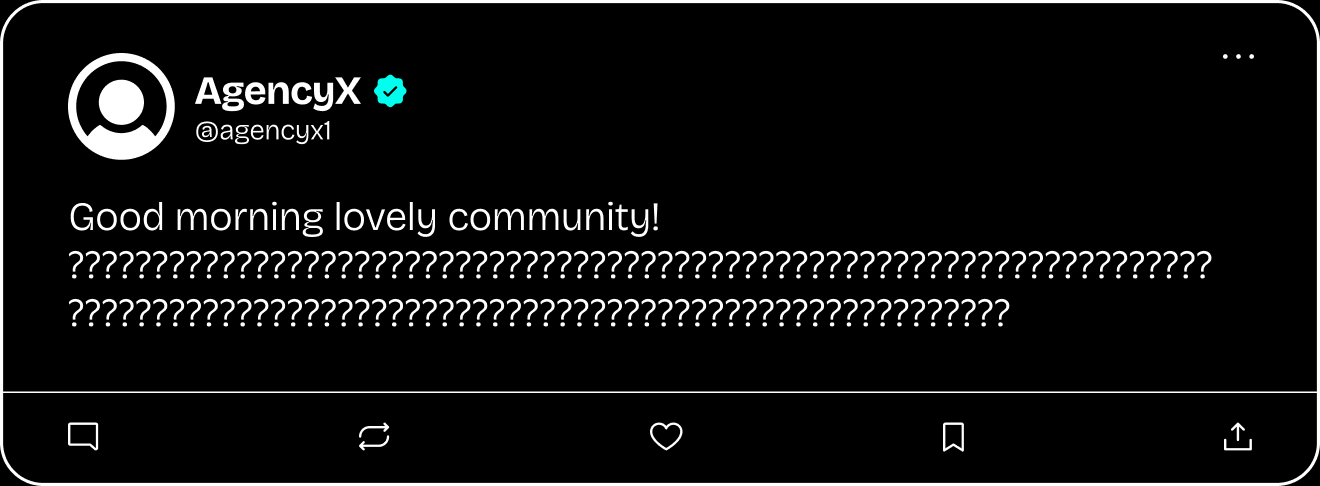
Word-vomit content kills engagement before it starts. Generic, repetitive, long-winded boilerplate that could apply to any project. When people scroll past your tweets because they're three paragraphs of corporate-speak, you've lost them. In a space where attention is the scarcest resource, bloated content means you're invisible. Every character counts on CT, not because of the character limit, but because everyone's moving too fast to read essays. Say it sharp or don't say it at all.
Posting outside your lane destroys credibility fast:
Try-hard energy is instantly cringe, and cringe is fatal on CT. When you try to participate in memes or movements you don't understand or naturally align with, when you force participation in conversations you're not actually part of, it shows. Fake is cringe. Desperate is cringe. And once you're cringe, the community has permission to dunk on you. You become the example. The screenshot. The cautionary tale.
Being unresponsive when it matters most is relationship poison. Projects that go quiet when something bad happens. Teams that aren't on top of breaking news that directly affects them. Accounts that tweet into the void but never actually engage with their community. In a space built on real-time conversation, silence or slowness reads as either incompetence or contempt. Neither is a good look. Your community wants to know you're there, you're listening, and you give a damn.
These tactics might work elsewhere. On CT, they're the sound of an agency checking boxes on a social media strategy deck.

Living in the age of phrases and memes means understanding that CT communicates in shorthand. Successfully using a phrase or image to convey a complex idea, from AI prompts to starting cult movements, is an art form here. When everyone else needs three tweets to make a point, the CT-native account says it in five words and a reaction image. They're not just using memes. They're thinking in memes. They understand that on CT, how you say something often matters more than what you're saying.
Being responsive but consistent is the balance that matters:
Having real friends and relationships with other users matters more than any engagement metric. Regular, authentic interactions with people. Not strategic partnerships announced with fanfare, but genuine relationships that play out in quote tweets, replies, and showing up for each other's wins. The community can tell the difference between networking and actual friendship. One builds credibility. The other looks like LinkedIn moved to Twitter.
Giving a f*ck, always, is the foundation. Being authentic isn't a strategy. Adding value isn't a tactic. These are table stakes. The accounts that win on CT are the ones where you can tell real humans care about what they're building, who they're building it for, and the conversations they're part of. No amount of clever posting can fake genuine investment. And no amount of professional polish can replace actually caring about your community and the space you're in.
A good Web3 marketing agency brings all of this to your project from day one: the cultural fluency, the real-time responsiveness, the genuine relationships, and the authentic investment in what you're building. You shouldn't have to teach them how CT works. They should already be there.
The core problem with agency CT execution: they treat it like a channel to manage instead of a culture to participate in. They bring playbooks from other platforms and wonder why nothing lands. But CT doesn't fit into their frameworks.
In Web3, your CT presence is your first impression. Before anyone reads your docs or checks your team page, they see how you show up on the timeline. Fair or not, your CT game signals everything about whether you're actually in this space or just visiting.
If your agency's tweets make you uncomfortable, trust that discomfort. The alternative exists: CT-native teams who live in the culture and execute in real-time. People who are online anyway, not because it's their job to monitor the timeline but because this is where they already are.
At Distractive, we don't teach people CT after they join the team. We are a crypto marketing agency that hires people who are already deep in it. If you're tired of agencies that promise crypto-native expertise and deliver corporate social with blockchain vocabulary, let's talk about what real CT fluency looks like.
Build the future of Web3 with people who get you. No suits required. Memes encouraged.
